[Builder Kit] Grove and Griddle Food Truck Business Plan
$ 49
The full package includes:
- the business plan,
- the live financial model,
- the Investor business plan,
- the SBA Loan business plan,
- the SBA Loan Projections
- the grant application,
- the grant budget,
- the pitch deck
- the story mode – so you can revisit the story at any time and remind yourself how everything was built and how it’s meant to work,
- the How To Use doc.
Read the original story here
Description
Where a food truck business plan usually breaks
A food truck is one window and one operator. A strong service is fifty five to sixty covers before the line gets long enough that people walk. One person who also preps, drives, cleans and does the books sustains about seventeen service days a month. Run those numbers flat out and the window clears roughly two and a half to three thousand dollars a month in profit after food cost, fuel, propane, commissary rent, insurance and the loan on the van. The break even math the Momo Hero way was blunt about it: covering the monthly fixed target on window sales alone would take about forty two service day equivalents, and a month has about thirty. The window is a real business and a real ceiling, and a plan that pretends otherwise is not honest.
The first version: one truck, one window
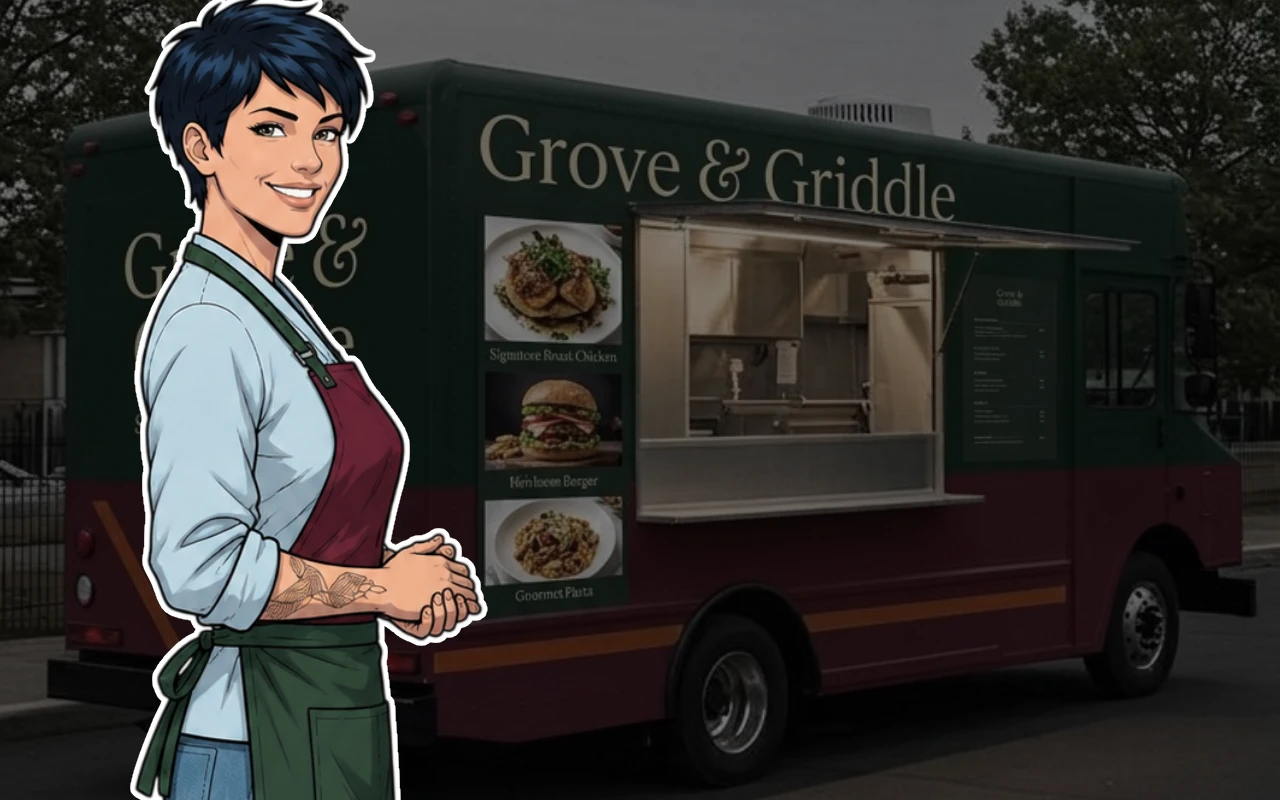
The first draft was just the truck. Buy a used step van with a certified kitchen already in it, wrap it, build a weekly rotation of brewery nights, business park lunches and a farmers market, sell a chef built entree at about fourteen dollars, and run it. Ran through SUP, it reached the month three target and then flattened, years short of month twelve. The niche was right, Elk Grove was right, and the model still could not carry the second deadline because one window cannot.
The second version: add catering, still lumpy
Version two kept the truck and added private and corporate catering. This made sense. A chef’s credibility converts hardest when someone is booking food for a wedding or a ninety person company lunch, and the truck sitting idle on a Wednesday could be parked in a backyard at about two thousand six hundred dollars a booking. Run back through ABCR and BFM, catering lifted the model to five or six thousand a month in profit by the end of year one. Better, and still not there, because catering is jagged: three events one month, none the next, a dead stretch every January and every run of rain. A monthly target with a deadline needs something that pays every month.
The turn: a prepaid Sunday Supper Club
The missing piece was a subscription. The Sunday Supper Club is a prepaid monthly box of four heat at home chef dinners for four people, picked up once a month at the truck, ninety five dollars, auto renew, cancel any time. It is aimed straight at the household Gabby already understands: two working parents tired of meal kits that still mean forty minutes and a full sink. It is prepped in one batched day at the commissary and sold to the email and text list that the free prep ahead guide and every truck guest feed into.
Running a recurring model through BFM changes the picture, because subscription revenue does not reset to zero each month. It accumulates: new members, minus about seven percent churn, on top of last month’s base. Gabby can pre sell the first twenty boxes to her restaurant regulars before the truck launches. By the model’s month ten the Supper Club carries more of the profit than the window and catering combined, and the ten thousand a month line clears with room. The truck stays the flagship that puts her food in front of new people every week. It is not the line that pays the mortgage.
The window builds the audience. The supper club and the catering line turn that audience into a monthly income.