Bakery Business Plan: How a Town of 500 Reaches $10,000 a Month
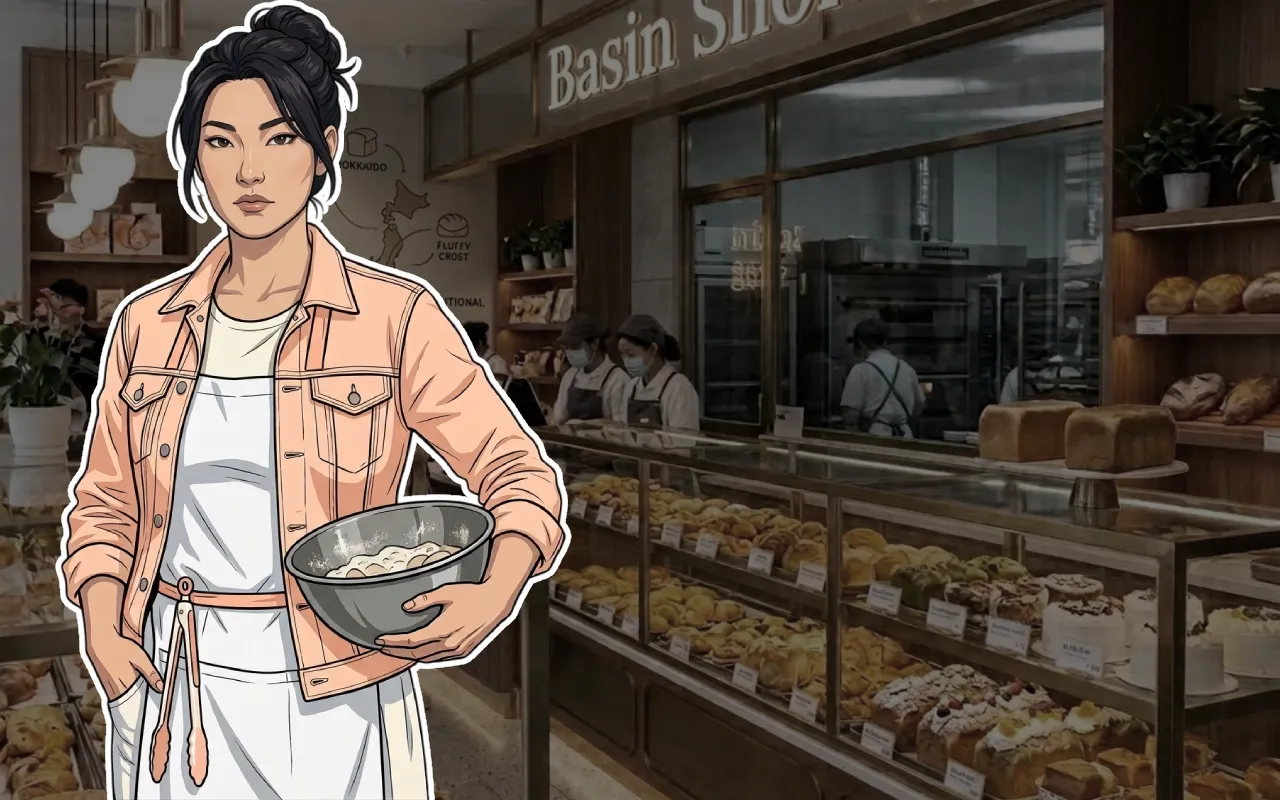
Imagine Sarah Wong driving back east on US-2 in March 2026, two hours from the Spokane airport, letting herself into a house in Coulee City that suddenly has too many rooms in it. Her parents and the rest of her family have just flown home to Japan. She is thirty-nine, she has lived in the Columbia Basin since she was eleven, and in a cupboard behind her are the lidded Pullman pans her mother used every Thursday to bake shokupan, the tall white milk bread the neighbors kept asking about. She wants to open a bakery. What she needs first is a bakery business plan that survives the size of her town.
This story is based on real projects and real requests from our clients. The numbers below come from a financial model built for this case, and the analysis methods behind it (POSCO, ABCR, SUP and BFM) are the same ones Momo Hero runs on working businesses.
The full plan, free PDF
The whole Basin Shokupan plan as a PDF, free to download. The three failed versions, the wholesale route, and the month the model clears $10,000.
Get the free PDFThe full package
The ten files behind a case like this one: the plan, the 25-month model with live formulas, the lender package and the deck.
Get a packageYour own model
The same work, built for your idea, your town and your numbers, with the math checked against real channel ceilings.
Order a custom buildThe problem a bakery business plan in a small town has to solve
Coulee City had about 500 residents at the 2020 census. It sits where US-2 meets the road to Dry Falls, Banks Lake and Grand Coulee Dam, and the Bureau of Reclamation counts roughly four million recreation visits a year around the Columbia Basin Project. So the town is small and the road is busy, and those two facts pull a plan in opposite directions.
Five hundred residents and four million visitors
A counter in a town this size lives on people who do not live there. In July it can do forty or fifty tickets a day. In January it does twelve. Any model that treats the storefront as the engine is really betting on four months of weather.
Cafes with nothing on the menu their competitors cannot buy
Within ninety minutes of Coulee City there are about 260 cafes, restaurants, grocers and lake resorts. They buy bread from broadline distributors, which is why the sandwich in Moses Lake tastes like the sandwich in Ephrata. The nearest Japanese bakeries are in Seattle, Bellevue and the Portland area, 150 to 300 miles away, with no route into the Basin. In Portland, Oyatsupan opened a dedicated shokupan workshop that supplies cafes with thousands of loaves a week, which is the proof that this demand is real once somebody delivers it.
From a village bakery to a plan that clears $10,000 a month
Three versions of this business were built and thrown away before one held up. Each was killed by a number, not by an opinion.
Version one: a counter for the town
The break-even model (SUP) took the startup cost, added eleven months of running costs and divided by a twelve-month payback: $25,478 a month to cover. A $15 counter ticket earns about $9.11 after ingredients, card fees and a tax reserve. The counter alone would need about 108 customers a day, every day, in a town of 500 people. Version one ended there.
Version two: a national subscription box
If the town is too small, sell to the whole country: a monthly box of Japanese baking, shipped anywhere. Run through honest advertising ceilings, one $28 box cost about $40 to sell and returned about $20 of gross profit. The model stayed red. A bigger conversion rate typed into a spreadsheet would have fixed that on paper only. The real fix was a cheaper product: a shelf-stable kit that shops stock and sell for us.
Version three: route plus subscription, still short
The third version put the money on a weekly delivery route and a household loaf subscription. Good business, wrong finish line: about $8,000 to $9,000 of owner profit by the end of year one. The rule at this stage is to change the product line rather than the conversion rates.
The version that worked
The kit came back in its right role: cases of twelve sold to gift shops, visitor-center stores, Asian groceries and kitchen shops through Faire, the wholesale marketplace those buyers already use. A shelf-stable product needs no daily bake and no storefront, so the quiet winter months, when US-2 empties out and the counter drops to four days a week, become packing months. That was the piece that closed the gap.
Whatever you open in a town of five hundred people has to earn its living from somebody who does not live there.
What POSCO said about the price of a loaf
POSCO scores real competitors on product, online presence, service, brand strength and physical presence, then prices against them. Here the set is the nearest Japanese bakeries plus the national shipped and kit brands a Basin customer can buy today.
The formula is our score times a competitor's price divided by that competitor's score. Against the shipped national loaf: 58 x $18 / 84.5 = $12.36. The 800 g loaf is priced at $12 retail and $7.00 wholesale, below the shipped benchmark and with no competing shokupan inside 150 miles.
The ABCR product line behind this bakery business plan
ABCR builds a line in five roles, from a free entry point to recurring revenue, so a customer has somewhere to go after the first taste. Two rungs carry the profit here, and neither of them is the shop.
The subscription is the quiet trick in this line. The loaf travels in a van that is already driving to that cafe, so a second revenue stream rides the first one at almost no added cost, and the cafe gets a customer walking in every pickup day.
What break-even demanded from this bakery business plan
The same SUP math that killed version one set the shape of the final plan. At $25,478 a month of fixed target, wholesale alone would need 49 accounts, which is more than two route days can serve. The counter alone would need 108 tickets a day. Four lines together clear it: the route carries most of the load, the subscription and the kit fill the rest, and the counter pays for itself while winning both.
How the 25-month model gets to $10,000 a month
BFM builds every channel month by month with growth rates and hard ceilings: no more than 4.5% of passing traffic notices the storefront, no more than 5% of people who see a card at a partner cafe open the subscription page, wholesale accounts cap at 30 on two route days and 42 on three, and the subscription caps at 300 members because that is the bake capacity reserved for it.
Owner profit, month by month
Where month-12 revenue comes from
Revenue is $283,941 in year one and $852,270 in year two, gross margin sits at 69%, and 72% of month-12 revenue repeats every month because standing orders and subscriptions renew on their own.
The calendar detail that nearly broke the model
The first honest run opened the bakery in April 2027 with a baker on payroll from day one. Month three landed in June, the ramp was still slow, and the month showed a loss of almost $7,000. The fix came from how a tourist town actually works: open in May so month three is July, bake alone for the first three months and add a part-time assistant in month four, and use the seven months before opening for holiday pop-ups under a Washington cottage food permit and a tasting tour of 90 route prospects. Month three then shows $1,353, and no month after it drops below $1,000.
What a lender sees in the same numbers
A loan officer reads a bakery business plan backwards: coverage first, then the story. The $115,000 project is funded by a $100,000 SBA 7(a) small loan over ten years plus $15,000 of owner equity, which is above the 10% injection a startup is usually asked for. The level payment is $1,349.35 a month. Coverage is 1.28 times in month 2 and 13.9 times by month 12, against the 1.25 norm most lenders write into the file. Loan proceeds buy equipment, a van, a build-out, signage, deposits and a working-capital reserve. Marketing is paid from revenue and owner cash, which is the other line that gets checked first.
What another founder can copy from this bakery business plan
Name the ceiling of your physical location before you fall in love with it. Count the businesses within ninety minutes that buy what you make every week, because one standing order is worth about sixty counter tickets a month and costs no storefront time. Give the slow season a product it can make. Put the numbers you cannot control, like how many people notice a sign, at the lowest defensible level and let the plan pass or fail there. And when the model misses the target, change the product line, never the conversion rate.
Next steps
Basin Shokupan is not built yet. There is a storefront to lease, a plan review with the Grant County Health District, three quotes for a used triple-deck oven and a loan application. What exists is a bakery business plan package of ten documents: the plan, a 25-month model with live formulas, a lender and investor version, a deck, the SBA loan package with three statements and a DSCR schedule, a grant package and a guide to editing all of it. You can read how the other cases were built in the Momo Hero case studies, see the methods in plain language on the Momo Hero methods page, or check the visitor data behind the traffic estimate at the Bureau of Reclamation's Grand Coulee page.
The full plan, free PDF
The whole Basin Shokupan plan as a PDF, free to download. The three failed versions, the wholesale route, and the month the model clears $10,000.
Get the free PDFThe full package
The ten files behind a case like this one: the plan, the 25-month model with live formulas, the lender package and the deck.
Get a packageYour own model
The same work, built for your idea, your town and your numbers, with the math checked against real channel ceilings.
Order a custom buildFrequently asked questions
How much does it cost to open a bakery like this one?
$115,000 in this plan: $36,000 of used production equipment, a $19,000 delivery van, a $12,000 build-out, $9,500 of front-of-house equipment, signage, deposits, permits, prepaid insurance, opening inventory and an $11,380 working-capital reserve.
Can a bakery business plan work in a town of 500 people?
Only if the plan sells beyond the town. Here the counter is about 18% of month-12 revenue and the other 82% comes from a wholesale route across three counties, a subscription picked up at partner cafes and a shelf-stable kit stocked by shops in other states.
Why is wholesale more profitable than the counter?
One account orders about $900 a month at a 69% margin and renews without selling it again. That is the volume of roughly sixty counter tickets, with no storefront hours, no waste on unsold display stock and one delivery stop.
How long until the owner is paid $10,000 a month?
Month 12 in this model, at $12,679 after all owner-level taxes. The first month above $1,000 is month 3, and cumulative profit turns positive in month 4.
Do I need an SBA loan to start?
A smaller start is possible under a Washington cottage food permit, selling at markets and pop-ups up to $35,000 a year. It cannot supply wholesale accounts or packaged kits, which is where the profit sits, so the loan buys the licensed production capacity the model depends on.
What should a bakery business plan include for a lender?
An SBA-style narrative, a use-of-proceeds table, three financial statements with monthly detail for year one, a loan amortization schedule and a debt-service coverage ratio. This package carries all of them, with coverage of 13.9 times by the end of year one.
How does the model handle a dead winter?
Storefront traffic is scaled by a season index that drops to 0.35 in January against 1.25 in July, counter hours shrink to Thursday through Sunday, and the winter labor goes into packing kits for shops, which sell hardest in November and December.