
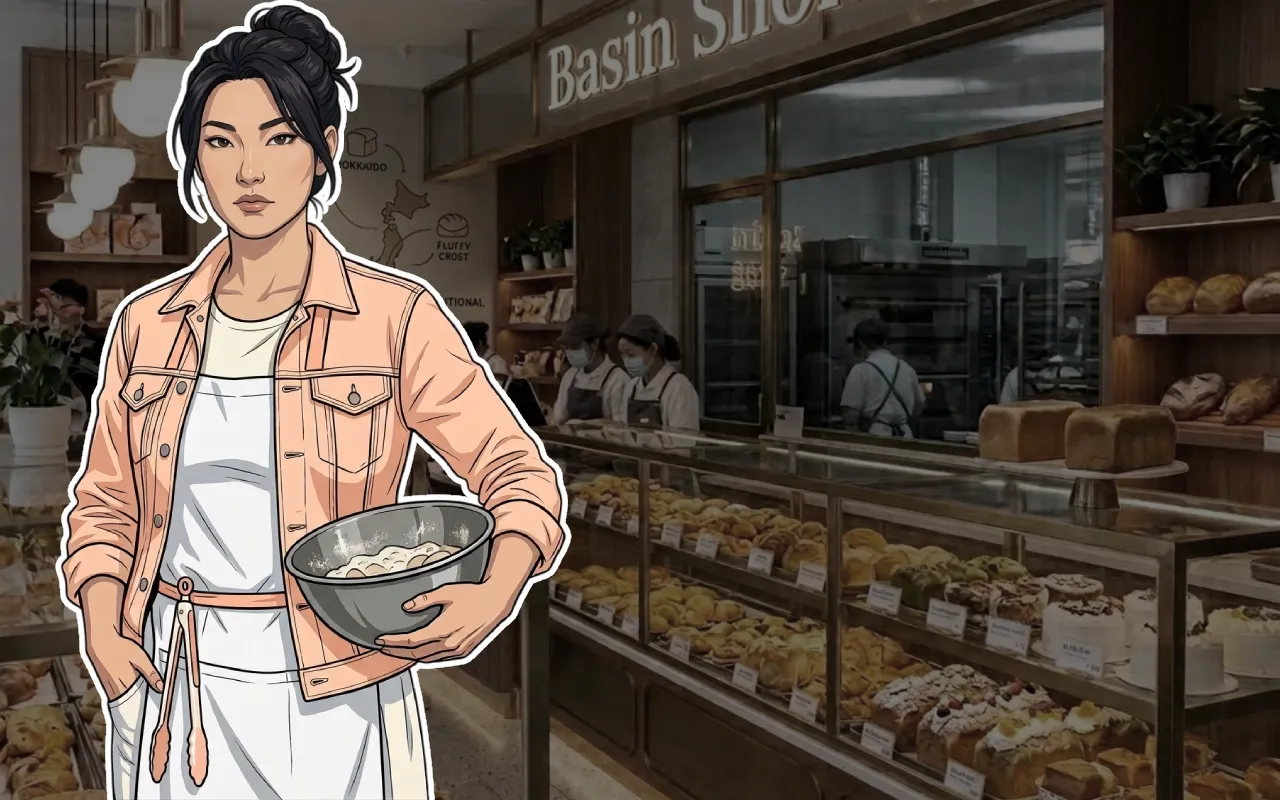
[Builder Kit] Basin Shokupan Bakery Business Plan
$ 49
The full package includes:
- the business plan,
- the live financial model,
- the Investor business plan,
- the SBA Loan business plan,
- the SBA Loan Projections
- the grant application,
- the grant budget,
- the pitch deck
- the story mode – so you can revisit the story at any time and remind yourself how everything was built and how it’s meant to work,
- the How To Use doc.
Read the original story here.
Description
The problem a bakery business plan in a small town has to solve
Coulee City had about 500 residents at the 2020 census. It sits where US-2 meets the road to Dry Falls, Banks Lake and Grand Coulee Dam, and the Bureau of Reclamation counts roughly four million recreation visits a year around the Columbia Basin Project. So the town is small and the road is busy, and those two facts pull a plan in opposite directions.
Five hundred residents and four million visitors
A counter in a town this size lives on people who do not live there. In July it can do forty or fifty tickets a day. In January it does twelve. Any model that treats the storefront as the engine is really betting on four months of weather.
Cafes with nothing on the menu their competitors cannot buy
Within ninety minutes of Coulee City there are about 260 cafes, restaurants, grocers and lake resorts. They buy bread from broadline distributors, which is why the sandwich in Moses Lake tastes like the sandwich in Ephrata. The nearest Japanese bakeries are in Seattle, Bellevue and the Portland area, 150 to 300 miles away, with no route into the Basin. In Portland, Oyatsupan opened a dedicated shokupan workshop that supplies cafes with thousands of loaves a week, which is the proof that this demand is real once somebody delivers it.
From a village bakery to a plan that clears $10,000 a month
Three versions of this business were built and thrown away before one held up. Each was killed by a number, not by an opinion.
Version one: a counter for the town
The break-even model (SUP) took the startup cost, added eleven months of running costs and divided by a twelve-month payback: $25,478 a month to cover. A $15 counter ticket earns about $9.11 after ingredients, card fees and a tax reserve. The counter alone would need about 108 customers a day, every day, in a town of 500 people. Version one ended there.
Version two: a national subscription box
If the town is too small, sell to the whole country: a monthly box of Japanese baking, shipped anywhere. Run through honest advertising ceilings, one $28 box cost about $40 to sell and returned about $20 of gross profit. The model stayed red. A bigger conversion rate typed into a spreadsheet would have fixed that on paper only. The real fix was a cheaper product: a shelf-stable kit that shops stock and sell for us.
Version three: route plus subscription, still short
The third version put the money on a weekly delivery route and a household loaf subscription. Good business, wrong finish line: about $8,000 to $9,000 of owner profit by the end of year one. The rule at this stage is to change the product line rather than the conversion rates.
The version that worked
The kit came back in its right role: cases of twelve sold to gift shops, visitor-center stores, Asian groceries and kitchen shops through Faire, the wholesale marketplace those buyers already use. A shelf-stable product needs no daily bake and no storefront, so the quiet winter months, when US-2 empties out and the counter drops to four days a week, become packing months. That was the piece that closed the gap.
Whatever you open in a town of five hundred people has to earn its living from somebody who does not live there.