
Momo Hero Story
The food truck business plan that pays the rent with a supper club
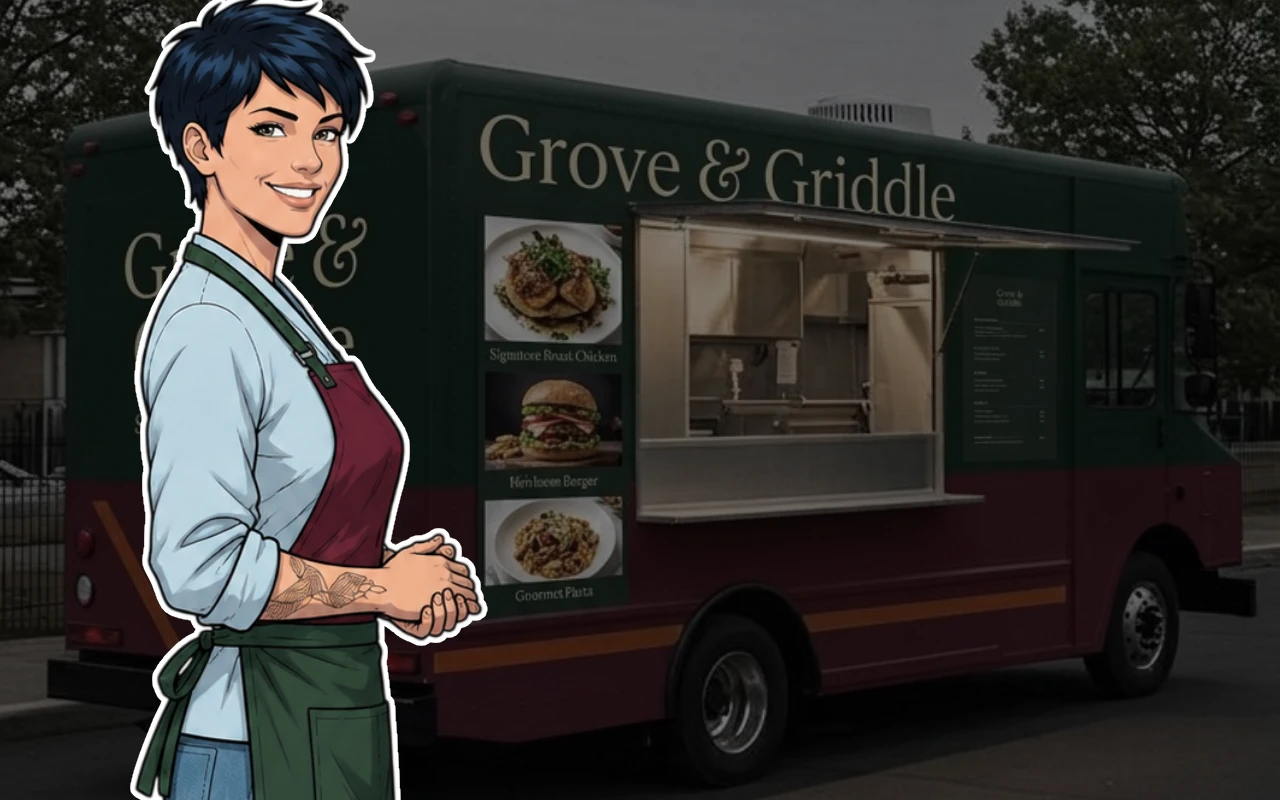
Imagine Gabby at the pass on a Tuesday night, plating the last chicken of the shift in a kitchen she used to love, before a restaurant group bought it and put frozen fries on the menu. She hangs up the apron, drives home to Laguna Ridge in Elk Grove, and opens a folder on her laptop called TRUCK. Eleven years on the line, a local following, twenty five thousand dollars saved, and a suburb of a hundred and eighty thousand people with almost nowhere to eat after seven that a chef would put a name on.
This story is based on real projects and real requests from our clients. The dollar figures below come from the 25 month financial model built for this case, and the analysis methods, POSCO, ABCR, SUP and BFM, are the same ones Momo Hero runs on real businesses. A food truck business plan lives or dies on whether the math survives a real stress test, so that is what this walkthrough shows.
Where a food truck business plan usually breaks
A food truck is one window and one operator. A strong service is fifty five to sixty covers before the line gets long enough that people walk. One person who also preps, drives, cleans and does the books sustains about seventeen service days a month. Run those numbers flat out and the window clears roughly two and a half to three thousand dollars a month in profit after food cost, fuel, propane, commissary rent, insurance and the loan on the van. The break even math the Momo Hero way was blunt about it: covering the monthly fixed target on window sales alone would take about forty two service day equivalents, and a month has about thirty. The window is a real business and a real ceiling, and a plan that pretends otherwise is not honest.
From one truck to a plan that clears $10,000 a month
One truck, one window
The first draft was just the truck. Buy a used step van with a certified kitchen already in it, wrap it, build a weekly rotation of brewery nights, business park lunches and a farmers market, sell a chef built entree at about fourteen dollars, and run it. Ran through SUP, it reached the month three target and then flattened, years short of month twelve. The niche was right, Elk Grove was right, and the model still could not carry the second deadline because one window cannot.
Add catering, still lumpy
Version two kept the truck and added private and corporate catering. This made sense. A chef's credibility converts hardest when someone is booking food for a wedding or a ninety person company lunch, and the truck sitting idle on a Wednesday could be parked in a backyard at about two thousand six hundred dollars a booking. Run back through ABCR and BFM, catering lifted the model to five or six thousand a month in profit by the end of year one. Better, and still not there, because catering is jagged: three events one month, none the next, a dead stretch every January and every run of rain. A monthly target with a deadline needs something that pays every month.
The turn: a prepaid Sunday Supper Club
The missing piece was a subscription. The Sunday Supper Club is a prepaid monthly box of four heat at home chef dinners for four people, picked up once a month at the truck, ninety five dollars, auto renew, cancel any time. It is aimed straight at the household Gabby already understands: two working parents tired of meal kits that still mean forty minutes and a full sink. It is prepped in one batched day at the commissary and sold to the email and text list that the free prep ahead guide and every truck guest feed into.
Running a recurring model through BFM changes the picture, because subscription revenue does not reset to zero each month. It accumulates: new members, minus about seven percent churn, on top of last month's base. Gabby can pre sell the first twenty boxes to her restaurant regulars before the truck launches. By the model's month ten the Supper Club carries more of the profit than the window and catering combined, and the ten thousand a month line clears with room. The truck stays the flagship that puts her food in front of new people every week. It is not the line that pays the mortgage.
The window builds the audience. The supper club and the catering line turn that audience into a monthly income.
How POSCO priced the food truck business plan
POSCO scores five real Sacramento area operators on product, online presence, service, brand and offline, then uses the ranking to justify a price. The leader is Drewski's Hot Rod Kitchen on a proven product, deep catering and fifteen years of brand. None of the five combines a resident chef's menu on a fixed suburban route, a prepaid neighborhood supper club and a scalable home cooking course. The competitor derived catering figure from the rank above is about eighteen dollars a head; Grove and Griddle sets a blended twenty four dollars a head, and the difference is stated to the client: menu design, on site cooking by the chef, a plated style option, disposables and setup. The truck ticket sits mid field at seventeen dollars, justified by the menu rather than priced above the market.
The ABCR product line, five roles
ABCR builds a line where each product has one job, from first taste to a standing monthly relationship. The two highlighted rungs carry most of the profit.
What SUP said about the window
SUP is a one page break even model: what the business must earn a month to cover its costs, and the margin per sale. The fixed monthly target lands near nineteen thousand dollars. At about four hundred and fifty nine dollars of contribution per service day, covering it on the window alone needs about forty two day equivalents against a ceiling of seventeen. That single line is the whole reason the plan is not just a truck. Catering and the Supper Club close the gap; the window feeds them.
How BFM took the food truck business plan to $10,000 a month
BFM is the 25 month model that shows when the business turns profitable and how much it earns, with one truck held as a hard ceiling. The Supper Club base accumulates to a commissary cap of a hundred and ninety members around month eleven, worth about eighteen thousand dollars a month. Catering climbs to five events a month by month twelve. The truck window fills to seventeen service days at fifty eight covers. The masterclass adds a few thousand a month from national reach that no single truck or suburb caps. Owner net profit after tax reaches one thousand dollars in month three and ten thousand dollars in month ten, and cumulative profit turns positive in month three.
Owner net profit by month
Both target deadlines are met with margin, on conversion rates held at or below published ceilings.
Two things the model caught
The Supper Club that grew forever on paper
The Supper Club grew forever on paper. Feed it a growing list and a seven percent churn and by month eighteen the spreadsheet had three hundred boxes prepped in a kitchen rented by the day, which one chef and one part timer cannot cook. So the base got a hard cap of a hundred and ninety members, roughly what a commissary batch prep day produces, flagged yellow the month it hits.
The truck and kitchen that ran out of days
The truck and the kitchen ran out of days. Early drafts had seventeen service days, five events and four batch prep days in the same month, plus driving and cleaning and living. So the model added a plain row that adds up truck and kitchen days used against the twenty seven a month one person plus part time help can really work, and it is not allowed to go negative. Catering is capped at five events, the window at seventeen days.
The numbers at month 12
By month twelve the business runs about fifty four thousand five hundred dollars in monthly sales at a sixty two percent gross margin. The recurring club and catering are the drivers; the window and the course build the audience that fills them.
Month 12 revenue by line
The first four weeks
File the California LLC and EIN, start the Elk Grove licence and the Sacramento County Mobile Food Facility permit and plan check, sign the commissary agreement, book the ServSafe exam, bind insurance.
Take delivery of the truck and pass the build out, fire and health inspections; commission the wrap; stand up the site with the catering form, Supper Club signup and masterclass page; set up the Google Business Profile, POS, ordering and accounting.
Film and edit the masterclass; publish the first content and the free guide; open Google Ads for catering; lock eight weeks of the truck schedule; pre sell Supper Club memberships to the restaurant following.
Soft launch at one brewery night and one market; run the first Supper Club prep and pickup; serve the first catering event; publish the masterclass for sale.
Owner net profit after tax crosses $10,000 for the first time; the Supper Club nears its 190 member commissary cap.
Run rate of about $16,000 a month in owner net profit on roughly $61,000 of monthly revenue from one truck; a second truck or a second prep shift is the next decision.
What a founder should take from this
The lesson is not about food trucks specifically. It is that a small physical business with a hard capacity ceiling reaches a real income target by adding a line that accumulates, a subscription or a wholesale relationship, not by hoping to sell far more of the capped thing. A truck plan that leans only on the window is a plan for a job, not a business. The window earns trust; a prepaid club and a recorded course turn that trust into money that arrives whether it rains or not.
FAQ
What makes this food truck business plan investor and lender ready?
It is built to the SBA outline with a funding request up front, a driver based 25 month model, and three linked GAAP statements in a companion workbook: income statement, balance sheet that balances every period, and an indirect cash flow. Projected debt service coverage is about nine times for year one and above the 1.25 lender norm in every month. The same pack also carries a pre seed SAFE alternative sized from real 2026 benchmarks.
Can this food truck business plan work without the supper club?
The window and catering alone reach about five to six thousand dollars a month in owner profit and stay lumpy. The prepaid Supper Club is what carries the plan past ten thousand a month, because its revenue accumulates instead of resetting each month. Remove it and you have a plan for a solid job, not a business that clears the target.
How much does it cost to start?
The project cost is $111,020: a used step van with a certified kitchen build out, the wrap and equipment, the Mobile Food Facility permit and other licences, insurance, the commissary deposit, software, and working capital. It is financed by a $95,000 SBA 7(a) small loan and a $25,000 owner equity injection.
When does it reach $1,000 and $10,000 a month in profit?
Net profit after tax reaches $1,000 a month in month three, at $2,280, and $10,000 a month in month ten, at $11,586. Month twelve reaches $14,306. Cumulative profit turns positive in month three.
Why is the truck window not the main profit line?
One operator sustains about seventeen service days a month at fifty eight covers. Covering the fixed monthly cost on the window alone would take about forty two service day equivalents. The window is capped; catering and the Supper Club are not, so they carry the profit and the window feeds them customers.
Is the masterclass really part of a food truck plan?
Yes. It is the same cooking content that markets the truck, filmed once and sold nationally at $39 with near zero cost per sale. It adds a few thousand dollars a month that no single truck or metro caps, and it is the base for a year two licensing or wholesale line.
What is in the full document pack?
Ten files: the business plan, the 25 month financial model, an SBA and investor business plan, a 19 slide pitch deck, a narrative story, an SBA loan business plan and projections workbook, a grant application and budget, and a guide to editing the pack. You can see more Momo Hero stories here.
Sales and profit figures are a model based hypothesis, not sales history. Market size draws on the IBISWorld Food Trucks in the US industry data and US Census figures for Elk Grove and the Sacramento metro. For a model built personally around your idea, talk to the Momo Hero team.